Garden science ยท Seed travel

How Tomato Seeds Travel

One tomato plant was planted. Then new tomato plants appeared in other places. A baby strawberry vine appeared too. This is a living lesson in seed dispersal, strawberry runners, pollination, animals, weather, and patient observation.

Best for summer or early autumn, when tomatoes are fruiting and the garden can be inspected with real eyes.

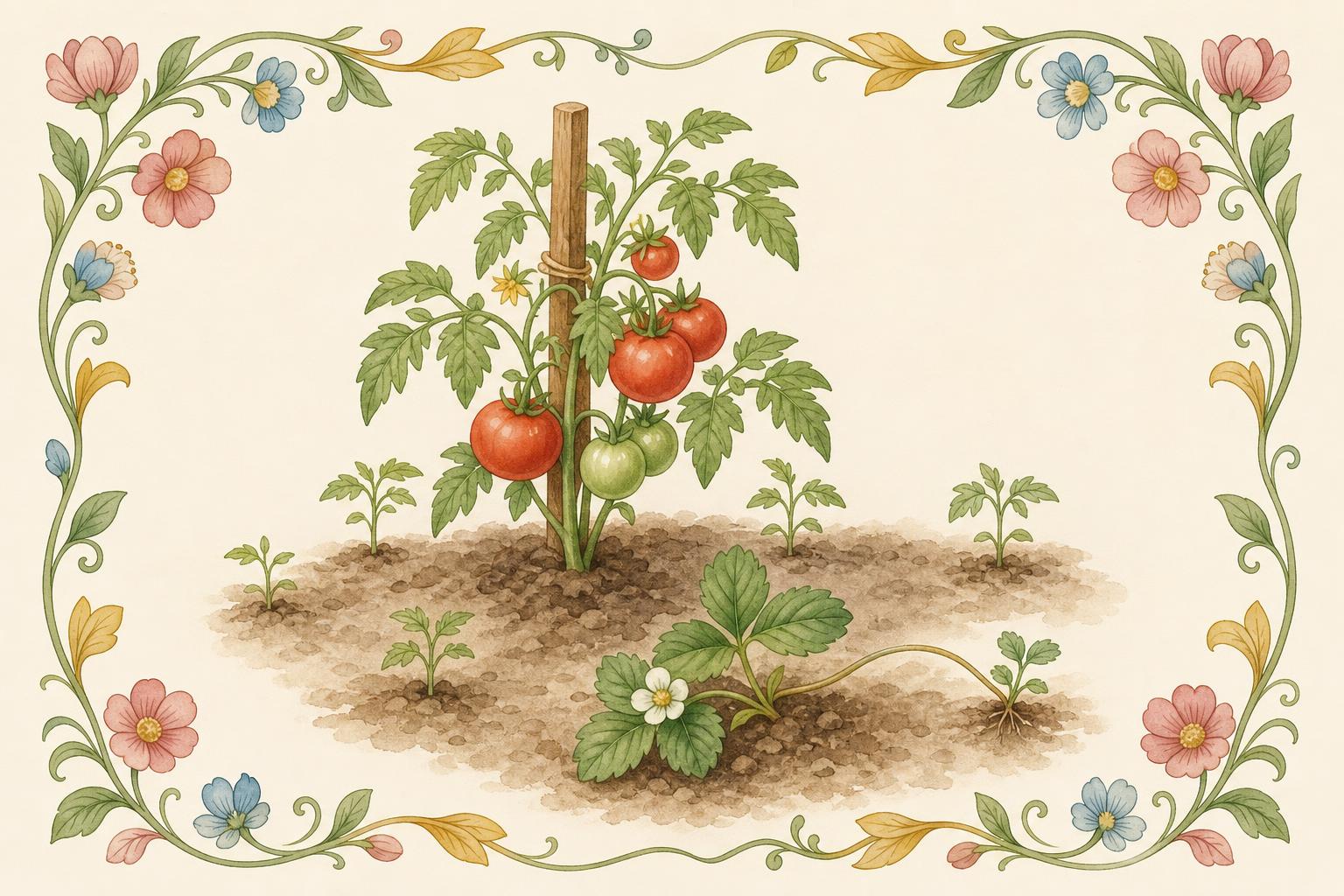
Watercolor tomato plant with volunteer seedlings and a baby strawberry runner

Aim

To help the child see that plants do not stay still in the way they seem to. A tomato plant cannot walk, but its seeds can travel inside fruit, inside animals, through compost, in rainwater, and on the hands and tools of the people who tend the garden.

The child should leave with one clear picture: a tomato is a seed package, and the world is full of helpers that move seed packages around.

Field Observation

Diana's tomato mystery

Observation: one tomato plant was planted on purpose. Later, more tomato plants appeared in different places. A baby strawberry vine showed up too. The question is not only What grew? The better question is How did the plant find that place?

Opening Verse

Little seed in red coat sleeping,
Who has carried you away?
Bird or rain or garden keeping,
Show your green face to the day.

The Big Idea

Watercolor summer garden with flowers and bees

A tomato is not only food. It is a soft red package full of seeds. When the tomato falls, is eaten, is carried, is composted, or is washed into a new place, the seeds may find soil, water, warmth, and light. Then a new tomato plant can grow.

Plants use many travel plans. Some seeds fly like dandelions. Some hook onto fur like burrs. Some float. Tomato seeds mostly travel inside soft fruit. Strawberries can travel by seed, but they also have a second plan: they send out runners, little creeping stems that make baby plants wherever they touch friendly soil.

Who Moved The Tomato?

Watercolor nature basket with garden treasures
  • Birds: a bird may peck or eat a tomato, then drop pieces or pass seeds later in droppings.
  • Squirrels, chipmunks, mice, and other small mammals: they may bite, drag, stash, or drop fruit in a new place.
  • Raccoons, possums, or other nighttime visitors: if they visit the garden, they may eat fallen fruit and move seeds in droppings.
  • Rain and watering: soft tomato pulp can wash downhill or into cracks where seeds settle.
  • Compost: tomato seeds can survive in cool compost. When compost is spread, surprise tomatoes may sprout.
  • People: shoes, gloves, tools, dropped fruit, and moved soil can quietly carry seeds from one bed to another.

What About Insects?

Insects are part of the tomato story, but they are usually not the main movers of tomato seeds.

Bees and bumblebees help tomato flowers turn into fruit by shaking pollen loose inside the flower. This is called pollination. Pollination helps make the tomato. Seed dispersal moves the seeds after the tomato exists.

Ants and other insects may nibble fruit or move tiny bits of pulp, but if several new tomato plants appear in different places, animals, compost, water, or people are more likely suspects.

The Strawberry Clue

Watercolor seed rows in a small garden bed

The baby strawberry vine in the video may have arrived in two different ways.

By runner: a strawberry plant can send out a long stem along the ground. Where the stem touches soil, it can root and become a new baby strawberry plant. This is the most common way strawberries spread nearby.

By seed: birds, small animals, compost, or moved soil can carry strawberry seeds. Strawberry seeds are tiny and sit on the outside of the fruit, so a pecked or dropped berry can leave seeds behind.

Garden detective question: is the baby strawberry connected to another strawberry plant by a thin stem? If yes, it is probably a runner. If it is standing alone with no connecting stem, seed or moved soil becomes more likely.

Garden Detective Work

Watercolor garden work scene for Diana Does Homeschool
  • Draw a simple map of the garden.
  • Mark the tomato plant that was planted on purpose.
  • Mark every surprise tomato plant with a small red dot.
  • Mark the baby strawberry vine with a small rose dot.
  • Ask: are the surprise plants downhill, near compost, near a path, near a fence, near another strawberry plant, or under a perch where birds sit?
  • Look for clues: pecked fruit, nibbled fruit, fallen tomatoes, animal droppings, moved soil, compost, or water paths.
  • Make a guess, then keep watching for a week.

Hands-On Lesson

Cut open a ripe tomato and let the child see the seeds in their slippery gel. Place a few seeds on a paper towel and a few in a small pot of soil. Label the pot Tomato Mystery.

Then take four dry beans or buttons and act out four ways seeds move: a bird carries one, rain rolls one, compost carries one, and a gardener's shoe carries one. Place each seed in a new spot on the table map.

For the strawberry, lay a green yarn strand from one pretend mother plant to a baby plant. Say: A runner is not a seed. It is the plant reaching out and rooting again.

Story Picture

Once there was a tomato plant who stood in the warm garden with her green hands lifted to the sun. She made yellow flowers. The bees came and buzzed the flowers awake. Then the flowers became small green tomatoes, and the small green tomatoes became red and heavy.

One red tomato fell. A bird came and tasted it. A little piece dropped by the fence. Rain came that night and carried the seeds into soft soil. The next morning no one saw anything at all.

But under the soil, the seed was listening. It drank. It warmed. It split its coat. One day a green hook rose from the earth, and the garden had a new tomato child no one had planted by hand.

Older Child Science

Pollination: pollen moves inside or between flowers so fruit can form. Tomato flowers can self-pollinate, but bumblebee vibration helps release pollen.

Seed dispersal: seeds move away from the parent plant. This reduces crowding and gives the seed a chance to find better soil, light, and water.

Volunteer plant: a plant that grows where a person did not intentionally plant it.

Hypothesis: a careful guess based on clues. Example: The surprise tomato near the compost may have come from seeds in compost.

Closing

Ask the child: Who do you think moved Diana's tomatoes? And how did the baby strawberry vine arrive?

Let the answer be a real guess, not a quiz. The point is to see the garden as alive with clues.

Seed below and sun above,
Root and rain and creature love,
What was hidden now is shown:
Gardens plant more than we own.